7 Best Quizlet Alternatives for AI Flashcards From Your Notes
Choose Aripsy for exam-focused flashcards and practice from your own material, Knowt for importing Quizlet sets, Anki for detailed spaced-repetition control, RemNote for notes and flashcards together, NotebookLM for source-grounded study, StudyFetch for a broader AI workspace, or Brainscape for confidence-based review.
 Aripsy Study Team
In this article17
The best Quizlet alternative depends on what you want to replace. Some students want to move an existing Quizlet deck. Others want AI to turn their own notes or PDFs into flashcards, quizzes, and active-recall practice. A third group needs serious spaced repetition for material they must remember over months.
This guide compares seven internationally useful options: Aripsy, Knowt, Anki, RemNote, NotebookLM, StudyFetch, and Brainscape. It covers school, university, vocational, language, and professional study workflows rather than assuming one national curriculum.
Aripsy is our product, so we disclose that relationship instead of presenting this as an independent ranking. Competitor capabilities were checked against the official product or help pages in the sources on 24 August 2026. Features, availability, and plan limits can change by country and account type.
Before uploading study material to any service, remove personal or confidential information and confirm that you have permission to process the material. AI-generated cards can contain mistakes, so verify important facts against your original notes, textbook, lecturer guidance, specification, or syllabus.
Quick answer: what is the best alternative to Quizlet?
Choose Aripsy when you want exam-focused notes, flashcards, and practice from your own material. Choose Knowt when moving existing Quizlet sets and using familiar test modes matter most. Choose Anki for detailed control over long-term spaced repetition. Choose RemNote when you want notes and scheduled flashcards in the same system. Choose NotebookLM for flashcards and quizzes grounded in several uploaded sources. Choose StudyFetch for a broader AI study workspace. Choose Brainscape for straightforward flashcards with confidence-based review.
There is no universal winner. Test the same small topic in two shortlisted tools, check the output, and choose the workflow you will actually use consistently.
Best Quizlet alternatives compared
| Tool | Best for | Starting material | Recall workflow | Main trade-off |
|---|---|---|---|---|
| Aripsy | Exam-focused study sets from your own material | Pasted text on Free; PDF, PowerPoint (.pptx), and Word (.docx) files on Pro | Flashcards with due-card review, questions, and Pro MCQs and fill-in-the-blanks | Lighter scheduling controls than dedicated systems such as Anki |
| Knowt | Moving Quizlet sets and keeping familiar study modes | Quizlet imports, notes, PDFs, presentations, and lecture material | Learn mode, practice tests, flashcards, and spaced repetition | AI allowances and plan access can change |
| Anki | Long-term retention with detailed scheduling control | Cards you create or import | Active recall with adaptive spaced repetition | More setup and card editing than simpler web tools |
| RemNote | Connected notes and flashcards | Notes, PDFs, text, and imported material | Cards inside notes with automatic spaced repetition | Its knowledge-base workflow takes time to learn |
| NotebookLM | Studying across several sources | PDFs, documents, slides, websites, audio, video transcripts, and more | Source-grounded flashcards, quizzes, explanations, and missed-card review | Not designed around public community decks |
| StudyFetch | An all-in-one workspace around course files | PDFs, lecture slides, notes, and other course material | Flashcards, quizzes, notes, tutoring, and spaced review | A broad workspace may be more than a flashcard-only learner needs |
| Brainscape | Simple adaptive flashcard review | Cards you create or find | Confidence ratings determine when cards return | Less focused on turning one source into a complete exam study set |
This table compares fit, not absolute quality. We did not run a controlled accuracy test using identical material across every product, so the order is based on workflow rather than a numerical score.
How to choose a Quizlet replacement
Start by identifying the job Quizlet currently performs for you.
You want to migrate existing Quizlet sets
Prioritise direct import, deck structure, images, and whether your preferred review mode survives the move. Knowt explicitly supports importing Quizlet sets. Anki and RemNote support broader import workflows, but the process may require exported files or additional formatting.
Keep a backup before moving a large library. After import, check formatting, images, symbols, line breaks, and card direction on a sample deck before assuming every set transferred correctly.
You want AI flashcards from your own notes
Compare supported input types, generation controls, editing, and what happens after the cards are created. A tool that accepts a PDF is not automatically useful if it produces broad questions, duplicates, or cards based on unimportant headings.
For this workflow, Aripsy, Knowt, RemNote, NotebookLM, and StudyFetch are the strongest candidates in this comparison. Their approaches differ: some start with structured study outputs, some keep cards inside notes, and some organise several sources in one workspace.
You want long-term active recall
Prioritise scheduling and review behaviour over AI generation. Anki, RemNote, Knowt, StudyFetch, and Brainscape each provide a form of adaptive or spaced review. The important test is whether the system makes difficult material return appropriately and whether you can maintain the daily review habit.
AI can reduce card-writing time, but it cannot rescue a deck filled with vague prompts. One clear question with one retrievable answer is usually more useful than a card asking you to reproduce a whole page.
You want more than flashcards
Choose a broader study tool if you also need notes, quizzes, explanations, source discussion, or exam practice. Aripsy, Knowt, NotebookLM, and StudyFetch are designed around more than card flipping. RemNote combines knowledge management with recall, while Anki and Brainscape are more focused on the review system itself.
1. Aripsy: best for exam-focused study material from your notes
Aripsy turns students’ own study material into structured notes, flashcards, questions, and other revision formats. It is a strong Quizlet alternative when your goal is not to browse public decks but to build an exam-focused study set from material you already trust.
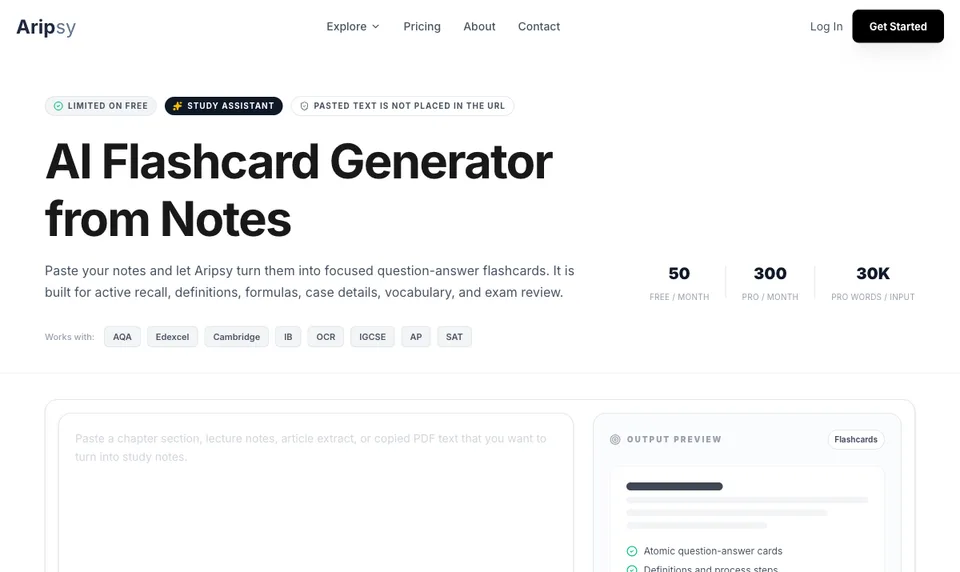
Signed-in Free users can paste text and generate notes and limited flashcards within plan allowances. Pro adds PDF, PowerPoint (.pptx), and Word (.docx) uploads up to 15MB, larger inputs, MCQs, fill-in-the-blank practice, and additional export options. Subject, level, focus, and supported curriculum settings can guide generation.
A practical workflow is:
- Start with one focused section of notes rather than an entire course.
- Select the relevant subject and study context.
- Generate concise notes before making recall material.
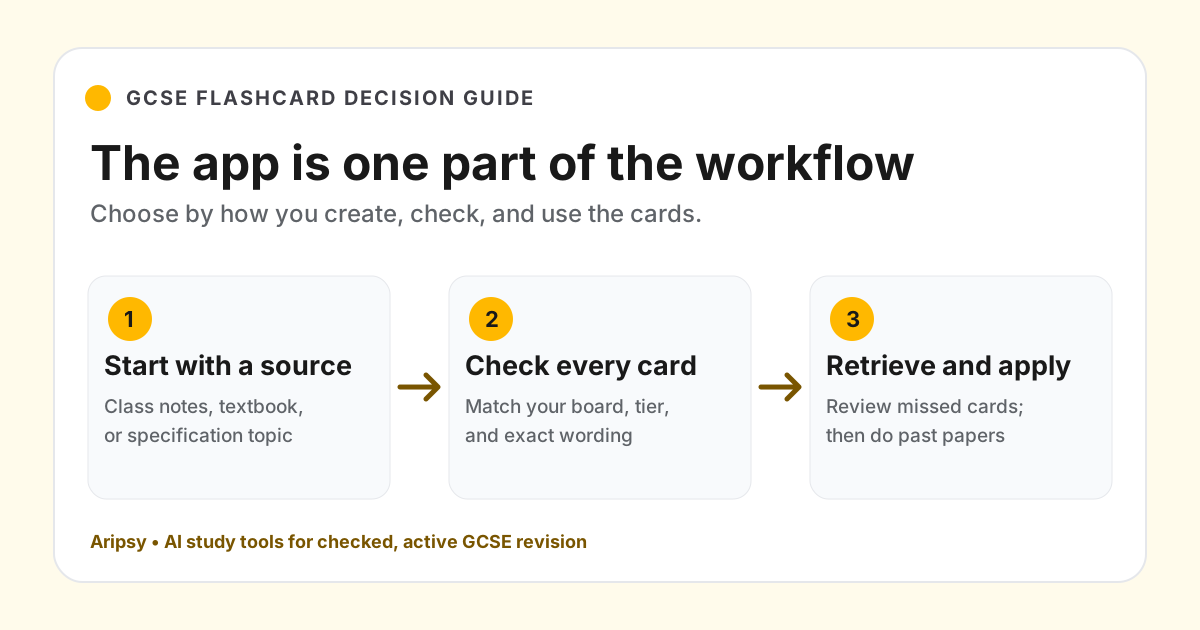
- Create a small flashcard deck and check it against the source.
- Add practice questions or Pro MCQs after you understand the topic.
Aripsy does not offer a public community-set library comparable with Quizlet. It includes due-card review scheduling for generated flashcards, but dedicated systems such as Anki and RemNote offer deeper long-term scheduling controls. Aripsy is better suited to students who want a controlled path from their own material to active revision.
Best fit: international students preparing from class notes, textbook extracts, revision material, or supported documents.
2. Knowt: best for importing Quizlet sets
Knowt is the closest replacement in this list when migration matters. Its official flashcard page supports importing Quizlet sets and describes Learn mode, practice tests, spaced repetition, public decks, and AI card generation from notes and course material.
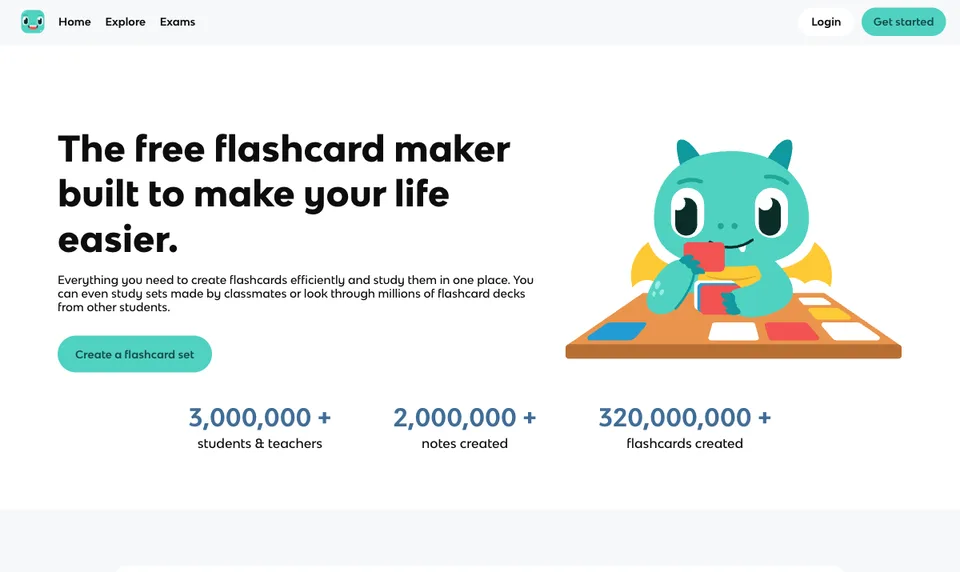
Knowt can also create flashcards from PDFs, presentations, and lecture notes. That makes it useful when you want both the familiar deck-based experience and newer AI workflows.
The direct-import promise should still be tested on a sample. Complex formulas, images, custom formatting, or unusual card structures may need manual correction after migration. Also verify current free and paid allowances before moving a large collection because AI products frequently revise their limits.
Best fit: students who already have Quizlet decks or want familiar flashcard, test, and review modes.
3. Anki: best for long-term spaced repetition
Anki is a strong alternative when scheduling control matters more than automatic content generation. During review, you rate recall and Anki schedules the next appearance of each card. The official desktop application is available across major computer platforms, with separate mobile clients.
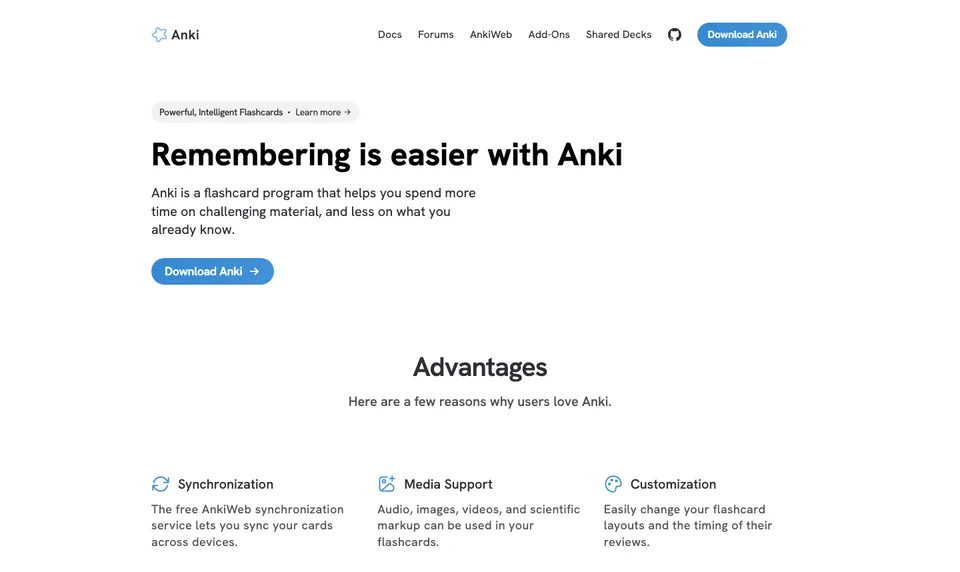
Anki works well for vocabulary, medicine, law, science, formulas, definitions, and other material that needs repeated review over a long period. You can create cards manually, import decks, customise templates, and extend the desktop app with add-ons.
The trade-off is setup. Anki gives you substantial control, but you still need good source material and well-written cards. Shared decks and AI-generated imports should be checked before memorisation. Students who want instant notes, quizzes, and explanations from a PDF may prefer to create a checked draft elsewhere and move only the strongest cards into Anki.
For a more detailed workflow comparison, read Anki vs AI flashcards.
Best fit: learners who value long-term retention and are willing to curate their decks.
4. RemNote: best for notes and flashcards in one system
RemNote combines note-taking and spaced-repetition flashcards. Cards remain connected to the notes that created them, so you can review a prompt without losing the surrounding explanation.
RemNote supports several card types, including question-and-answer, cloze, image occlusion, concept, and multiple-choice formats. Its current product pages also describe AI flashcard generation from notes, PDFs, or text and automatic review scheduling.
This structure can suit medicine, engineering, law, languages, and other subjects where concepts connect across many pages. The learning curve is higher than a simple deck app because you are building both a knowledge base and a review system.
If you are deciding between connected notes and a dedicated scheduler, see RemNote vs Anki vs Aripsy.
Best fit: students who want to write notes, create cards, and review them without moving between separate apps.
5. NotebookLM: best for source-grounded flashcards and quizzes
NotebookLM is useful when your study set depends on several sources. Google currently supports inputs including pasted text, PDFs, Word files, slides, spreadsheets, websites, images, audio, e-books, and public YouTube videos with captions.
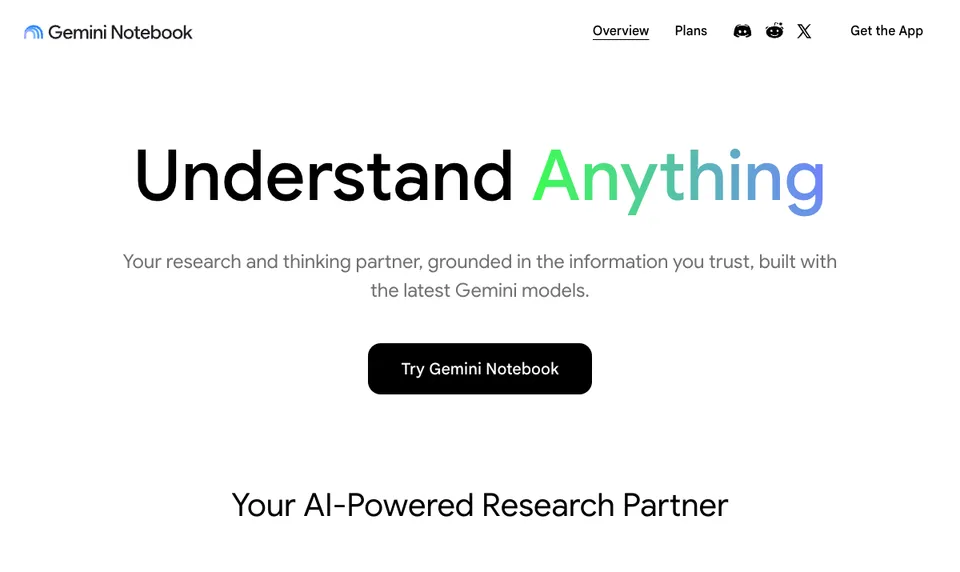
Its Studio can generate flashcards and quizzes from notebook sources. Students can adjust difficulty and focus, request explanations, mark cards as understood or missed, repeat missed cards, and download flashcards as CSV. Chat responses in NotebookLM are grounded in the selected notebook sources and include inline citations.
NotebookLM is not a direct replacement for Quizlet’s public-set ecosystem. It is a stronger choice when you need to study across a lecture pack, reading list, research sources, or several course documents and want answers tied back to those sources.
Availability can depend on age, country, and whether a school or organisation manages the Google account. Check current access rules before choosing it for a class-wide workflow.
Best fit: university and research-heavy learners who want interactive study aids grounded in several documents.
6. StudyFetch: best for a broader AI study workspace
StudyFetch connects uploaded course material with flashcards, quizzes, notes, tutoring, and other study formats. Its official PDF workflow describes generating several card types from source material and scheduling reviews according to how the learner rates each card.
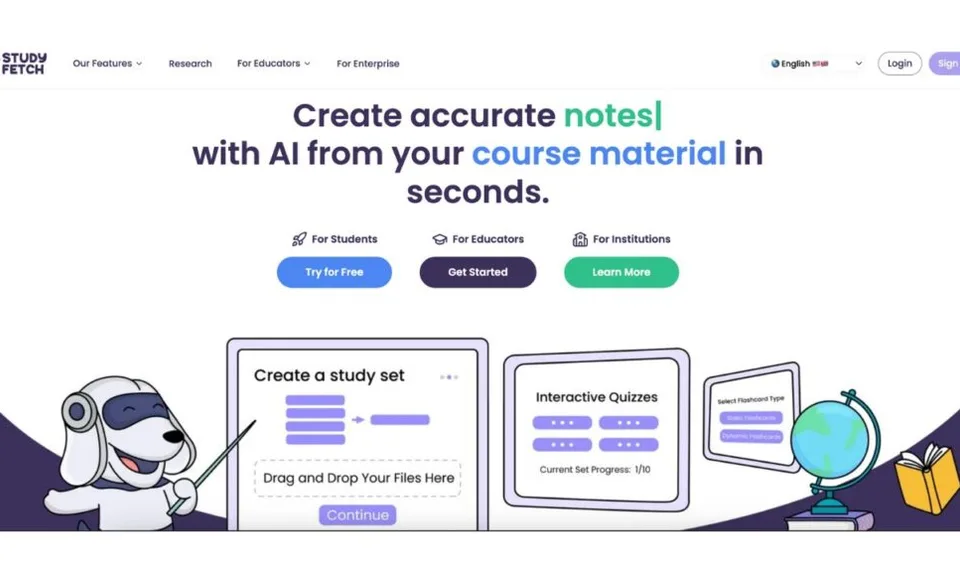
The same PDF or lecture material can become notes, quizzes, and other activities, which is useful when a course requires more than memorising definitions. It may particularly suit lecture-heavy or reading-heavy university study.
The breadth is also the trade-off. If you only need a fast card maker, a large workspace may introduce unnecessary setup. Compare the exact input, tutoring, and review features you intend to use rather than choosing by the total number of features.
Best fit: students who want a broad learning environment around uploaded course files.
7. Brainscape: best for confidence-based flashcard review
Brainscape provides public and custom flashcards with a review system it calls Confidence-Based Repetition. After revealing an answer, learners rate how well they knew it. Lower-confidence cards return more frequently, while stronger cards are spaced further apart.
That creates a straightforward rhythm for languages, professional certification, terminology, and fact-heavy subjects. Brainscape is a useful alternative when your priority is adaptive flashcard practice rather than generating a full set of notes, quizzes, and exam outputs from one source.
As with every public deck library, check course relevance and factual accuracy. A polished community deck can still use a different syllabus, regional definition, legal framework, or technical convention from the one you need.
Best fit: learners who want simple web-and-mobile flashcards with confidence-driven repetition.
Which alternative fits your qualification or course?
These tools are not tied to one education system, but the best workflow changes with the assessment.
| Study context | Useful starting point | Why |
|---|---|---|
| GCSE, IGCSE, A-Level, IB, AP, SAT, or school exams | Aripsy or Knowt | Both can turn personal study material into active-recall outputs; check syllabus alignment |
| University lectures and reading packs | NotebookLM or StudyFetch | Both support study workflows around multiple or substantial source files |
| Medicine, law, engineering, or professional certification | Anki or RemNote | Stronger emphasis on maintaining large card collections over time |
| Language learning | Anki or Brainscape | Adaptive review is valuable for vocabulary and recurring recall |
| Moving an existing Quizlet library | Knowt first; then test Anki or RemNote if needed | Direct import is the simplest starting point, while other systems offer more control |
| Turning notes into an exam study set | Aripsy | The workflow connects notes with flashcards and additional practice formats |
Always account for local terminology. A public deck created for another country may use different spelling, units, laws, clinical guidance, historical framing, or qualification requirements. International availability does not guarantee local syllabus relevance.
A fair way to test two alternatives
Do not move your full library or buy a plan based on a homepage comparison. Run a small test:
- Choose one representative page of notes or one short PDF section.
- Generate 15 to 20 cards in each shortlisted tool.
- Check every card against the source.
- Count duplicates, unsupported claims, vague prompts, and missing essential ideas.
- Edit five cards and compare how easy the editing workflow feels.
- Complete a review session and inspect how mistakes return.
- Check export, deletion, privacy, and current plan limits before uploading more material.
The best result is not the tool that creates the most cards. It is the one that produces a manageable draft, makes verification easy, and helps you retrieve the right knowledge later.
How to make AI flashcards useful for active recall
Whichever Quizlet alternative you choose:
- Keep one testable idea per card.
- Ask a precise question instead of using a topic label.
- Remove clues that reveal the answer.
- Add application cards when your assessment tests reasoning.
- Separate definitions, examples, exceptions, and calculations.
- Say the answer before revealing it.
- Mark uncertain cards and check the source immediately.
- Combine flashcards with worked problems, essays, practical tasks, or past questions where relevant.
Flashcards support active recall only when you try to retrieve the answer. Repeatedly rereading the front and back can create familiarity without reliable recall.
When should you stay with Quizlet?
Switching has a cost. Quizlet may still be the right choice when:
- Your teacher or class already shares reliable sets there.
- You depend on a particular Quizlet study mode.
- Your existing library would take too long to clean and migrate.
- Public community decks are more important than generating material from your own notes.
- Your current workflow is consistent and producing useful recall practice.
If your main concern is how Aripsy differs specifically from Quizlet, use the Aripsy vs Quizlet comparison. For a practical creation workflow, see the free online flashcard maker guide. For tutor, notes, research, and multimedia workflows beyond flashcards, compare the best AI-powered study apps for students in 2026.
FAQ
What is the best free alternative to Quizlet?
The best free alternative depends on the task. Aripsy Free supports pasted-text notes and limited flashcard generation for signed-in users. Knowt publicly supports Quizlet imports and several study modes. Anki’s desktop application and AnkiDroid are free, while its official iOS client is a separate purchase. Other tools offer free access with changing feature or usage limits. Check current official plan pages in your country before relying on a particular feature.
Which Quizlet alternative can import my sets?
Knowt explicitly supports importing Quizlet sets. Other tools may accept exported text or files, but formatting can change. Back up your sets and test one deck before migrating a full library.
Which alternative makes flashcards from PDFs?
Aripsy Pro accepts PDF, PowerPoint (.pptx), and Word (.docx) files up to 15MB. Knowt, RemNote, NotebookLM, and StudyFetch also describe PDF-to-flashcard workflows. Document support does not guarantee that diagrams, scans, formulas, or tables will be interpreted correctly, so check the generated cards against the source.
Which alternative is best for active recall and spaced repetition?
Anki is a strong choice for detailed spaced-repetition control. RemNote is useful when cards should remain connected to notes, while Knowt, StudyFetch, and Brainscape offer their own adaptive review workflows. Aripsy focuses more on generating exam-oriented recall material than scheduling a long-term review queue.
Can I use these alternatives outside the United States or United Kingdom?
This comparison is written for learners across different education systems, but each tool’s availability, pricing, age rules, payment methods, and school-account access can vary by country. Verify that public decks and generated outputs match your local syllabus, terminology, units, and assessment requirements.
Are AI-generated flashcards accurate?
They are drafts, not guaranteed answers. Check definitions, formulas, dates, quotations, exceptions, diagrams, and course-specific wording before memorising them. Use a teacher-approved source, current textbook, official specification, or your original course material for verification.
Can flashcards replace practice questions?
No. Flashcards are useful for retrieval, but many assessments require explanation, calculation, evaluation, essay structure, practical skills, or unfamiliar application. Combine cards with questions, feedback, and correction of mistakes.
Sources
- Aripsy study tool
- Aripsy pricing
- Aripsy privacy policy
- Quizlet AI study tools
- Knowt flashcard maker and Quizlet import
- Anki official website
- Anki manual: active recall and spaced repetition
- RemNote flashcards inside notes
- RemNote spaced repetition
- Google: learn about NotebookLM
- Google: generate flashcards or quizzes in NotebookLM
- StudyFetch PDF to flashcards
- Brainscape flashcards and confidence-based repetition
Final verdict
The best Quizlet alternative is the one that solves your actual bottleneck. Use Knowt when migration and familiar modes come first, Anki or RemNote when long-term scheduling matters, NotebookLM when several sources need to remain visible, StudyFetch when you want a broader AI workspace, and Brainscape when you prefer confidence-based card review.
Choose Aripsy when you want to turn your own material into exam-focused notes, flashcards, and practice without depending on public decks. Start with one topic, verify the output, and expand only when the workflow proves useful.
Keep exploring
AI Study Tools
Compare AI study apps by the job they do, the material they accept, and how easily students can check the output.
Explore AI Study Tools guides
Written by
Aripsy Study Team
The Aripsy Study Team creates practical revision guides designed to support learning, source checking, and active practice.